Inspiring An Academic Eye of the Tiger

rocky-philly

The trend of major city community colleges to make tuition-free opportunities available to its students continued last week as the Community College of Philadelphia announced such an initiative — called the 50th Anniversary Scholarship — for low-income graduates of the city’s beleaguered school district.

With the announcement, the City of Brotherly Love joins Chicago, Ill.; Detroit, Mich.; Miami, Fla.; Seattle, Wash.; and Portland, Ore., with similar programs focused exclusively on two-year colleges.

The Community College of Philadelphia’s foundation will cover costs for the program, which will begin immediately for the Class of 2015, and has a goal to raise $10 million to create an endowment. The hope is to build that to $40 million and cover such expenses as books in the future.

Wrote Susan Snyder of the Philadelphia Inquirer, “College officials estimate that 440 students will qualify for the program in the first year and by the third year, the number will rise to 845.”

“There are far too many students who, even with financial aid, are unable to meet the gap that exists between the financial aid they get and what final tuition would be,” said college president Guy Generals. “We do think it will attract more students, which increases enrollment. For us, that’s a good thing.”

In addition to students from the public school system — which has experienced a troubling number of layoffs and school closings in recent years — the Scholarship is also available to those in private, parochial and charter schools.

Students will need to maintain a 2.5 grade-point average at the end of each academic year to keep the scholarship, which allows three years for degree completion. Other requirements include participation in an extracurricular activity and a support program as well as a once-a-semester meeting with an advisor.

With Promise Comes A Trust

promise-trust

If you came up with a prioritized list of concerns for almost every Promise program or nearly everyone looking to start a Promise program, the top item — perhaps the top two or three — would be funding.

Last December, our own Patricia Melton wrote a story about college costs surpassing even lottery income in a number of states, forcing legislatures to reduce award amounts or tighten qualification standards. This morning, Inside Higher Ed published a story focused on sustainability of Promise programs nationwide and spoke to Melton about that piece.

As the Executive Director of New Haven Promise, she told Kaitlin Mulhere that “directors have to be wise stewards of money year to year, always on the lookout for fluctuations in economics, enrollment and even politics.”

Dr. Michelle Miller-Adams of the Upjohn Institute — who has helped several cities develop results-based Promise programs — added that it is wise to “caution people to underpromise and overdeliver.”

Dwindling state support can also impact Promise programs, whose guidelines are often devised within the financial framework of the time of the announcement without enough thought about the future. Less than a month ago, Arizona lawmakers simply gutted its largest community colleges. No Promise program in the nation could adequately react to such a seismic shift in the college affordability landscape. Thus Promise programs must be precise from the start to develop funding, programming and language that is sustainable.

Rodney Andrews — who focuses on the economics of education as an assistant professor at the University of Texas at Dallas — told Mulhere that failing to create sustainable revenue streams and mitigate factors beyond one’s control can lead to trouble.

“If not,” Andrews said. “You have to make some changes to the promise, which sort of defeats the purpose of making a promise.”

More Fruit From The Seeds Of Promise

cop-harper-college

There is a Johnny Appleseed result that comes from the establishment of a Promise.

Kalamazoo Promise has hatched more than a dozen programs in the state of Michigan. Earlier this year Cities of Promise featured the Braddock Promise, which is an initiative following the lead of the nearby Pittsburgh Promise. New Haven Promise was the first of its kind in New England and Hartford will join the Promise Nation next year.

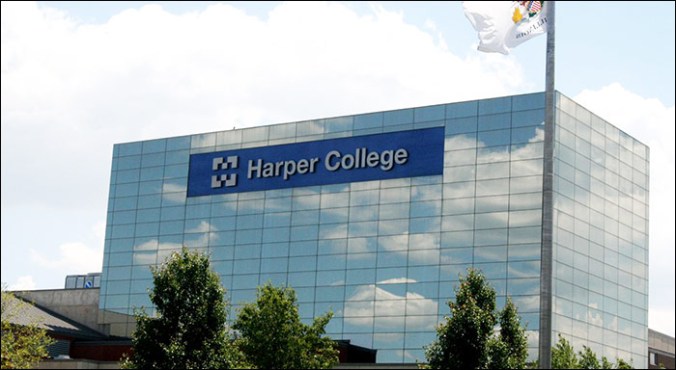
Now Illinois is a hot spot for Promise with Harper College announcing last week that its new Promise Scholarship will be serving public high school students in the Northwest suburbs of Chicago starting in 2019.

Chicago’s STAR Scholarship received a lot of attention in recent months when it was heavily cited during President Barack Obama’s push for America’s Promise, which would open up community college as an extension of high school.

But Illinois has also been home to two other community college Promise programs — one in Peoria and the other in Galesburg. And the Peoria Promise appears to be the model for the Harper College initiative.

A quick look at the perimeters show that the program will be rather inclusive as it relates to high school grades, but tight in its requirements for both attendance and community service. Once enrolled as a tuition-free scholar at Harper, there will still be service expectations as well as increasing minimums of grade-point success.

“A college credential has never been more crucial to success than in today’s 21st century economy,” Harper President Dr. Kenneth Ender said. “This program has the potential to positively impact not only deserving and motivated students, but the entire region by presenting employers with an educated and skilled workforce.”

The school’s board of trustees has set aside $5 million from the general fund and the school has also secured another $1 million in donations so far while Motorola Solutions Chairman & CEO Greg Brown and his wife, Anna, are chairing a campaign to raise $10 million to fund the program into the future.

Harper College — perhaps best known as the alma mater of Academy Award winner Marlee Matlin — is located in the Village of Palatine about 25 miles from downtown Chicago.

Hartford Promise Has A Leader

cop-sugarman

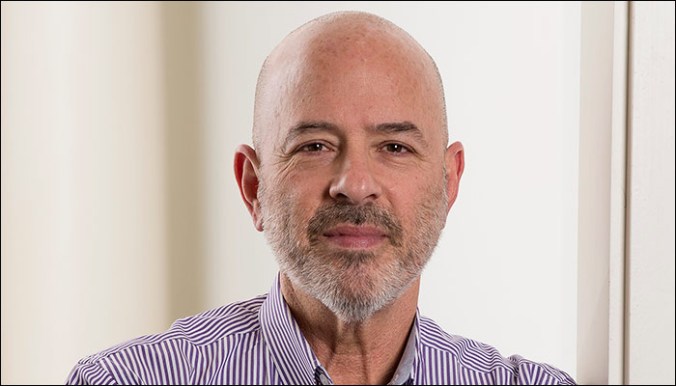
Richard Sugarman — the founding president of The Connecticut Forum — has been named the first Executive Director of Hartford Promise, which will offer up to $20,000 and non-financial support to its first graduating class in 2016.

“We are extraordinarily fortunate to have Richard Sugarman lead this initiative,” said Dr. Martin Estey — the Executive Director of the Hartford Consortium for Higher Education who also served on a panel at PromiseNet 2014. “His proven leadership skills, ability to build collaborations, and knowledge of the community and educational issues are profound. I’m excited to work with him.”

Sugarman’s Connecticut Forum is an award winning non-profit organization that brings nationally known panelists to Hartford four times a year to discuss a variety of timely and important topics. The Forum has also developed outreach programming, including The Connecticut Youth Forum which grew from the response to Focus on Race Relations in 1993.

“Education…providing the highest quality education and opening all the doors of possibility for every child in our community has been a core value and longstanding priority for me,” said Sugarman. “Hartford Promise offers a transformative opportunity to make the dream of higher education a reality for every Hartford student. I’m excited to launch Hartford Promise and work with many others to build it into the significant, sustained promise that all our children deserve.”

The requirements for the scholarship are very similar to New Haven Promise as Hartford scholars will need to be city residents who have been enrolled in the public system for their entire high school career. They will need to carry a minimum 3.0 grade point average and meet district attendance criteria.

“Richard Sugarman’s appointment moves us another step toward our vision of creating a school system where every student is well prepared, both intellectually and financially for college and career success. I’m excited and eager to begin working with him,” said Hartford School Superintendent Beth Narvaez. “The Hartford Promise is a well thought out approach to building student readiness and breaking down barriers that stand in the way of post-secondary education. It will define our district for many years to come. I want to thank the business and non-profit leaders in the city who joined together to support this breakthrough strategy.”

To date, $3.8 million has been pledged to Hartford Promise from contributors and champions including: The Travelers Foundation ($2 million); Hartford Hospital ($1 million); George Weiss-Say Yes to Education Foundation ($500,000); Newman’s Own Foundation ($200,000); and Robert Patricelli, Chairman, President and CEO of Women’s Health USA ($100,000).

Sugarman started the position last week and one of his first days on the job included a visit to New Haven to take in the release of an early progress study by the RAND Corporation.