More Fruit From The Seeds Of Promise

cop-harper-college

There is a Johnny Appleseed result that comes from the establishment of a Promise.

Kalamazoo Promise has hatched more than a dozen programs in the state of Michigan. Earlier this year Cities of Promise featured the Braddock Promise, which is an initiative following the lead of the nearby Pittsburgh Promise. New Haven Promise was the first of its kind in New England and Hartford will join the Promise Nation next year.

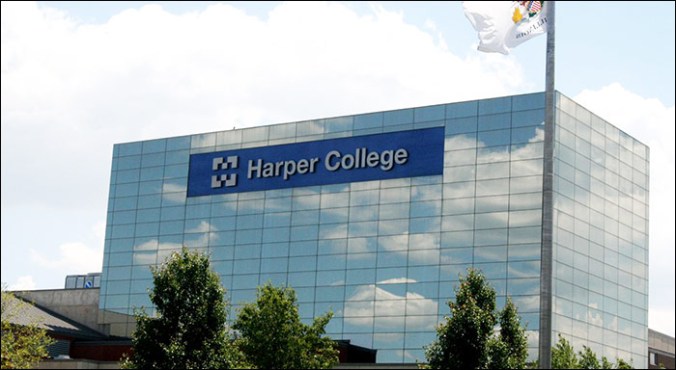
Now Illinois is a hot spot for Promise with Harper College announcing last week that its new Promise Scholarship will be serving public high school students in the Northwest suburbs of Chicago starting in 2019.

Chicago’s STAR Scholarship received a lot of attention in recent months when it was heavily cited during President Barack Obama’s push for America’s Promise, which would open up community college as an extension of high school.

But Illinois has also been home to two other community college Promise programs — one in Peoria and the other in Galesburg. And the Peoria Promise appears to be the model for the Harper College initiative.

A quick look at the perimeters show that the program will be rather inclusive as it relates to high school grades, but tight in its requirements for both attendance and community service. Once enrolled as a tuition-free scholar at Harper, there will still be service expectations as well as increasing minimums of grade-point success.

“A college credential has never been more crucial to success than in today’s 21st century economy,” Harper President Dr. Kenneth Ender said. “This program has the potential to positively impact not only deserving and motivated students, but the entire region by presenting employers with an educated and skilled workforce.”

The school’s board of trustees has set aside $5 million from the general fund and the school has also secured another $1 million in donations so far while Motorola Solutions Chairman & CEO Greg Brown and his wife, Anna, are chairing a campaign to raise $10 million to fund the program into the future.

Harper College — perhaps best known as the alma mater of Academy Award winner Marlee Matlin — is located in the Village of Palatine about 25 miles from downtown Chicago.

The Scholars Will Change The City

nh-scholars

On Tuesday in New Haven, Conn., a large collection of the city’s movers and shakers gathered for the release of a study from the RAND Corporation — Transforming an Urban School System — which studied the early progress of education reforms launched in 2010.

RAND’s community briefing — presented by Dr. Gabriella C. Gonzalez — focused on both the broad New Haven School Change initiative as well as the impact of New Haven Promise, which currently funds more than 400 college students across the state of Connecticut.

np-logoThe district-wide findings showed modest gains. Average test scores showed improvement and college-going increased slightly. Dropout rates at the lowest-performing schools showed improvement, as did test scores at those same schools. And overall, RAND summarized, there was an increased college-going culture across the school district.

The results were perhaps exactly what one might expect in just three years of implementation as the work to change the course of an entire city’s school district is a long-term commitment.

But the assembled press gave nearly as much attention to a two-page infographic produced by New Haven Promise as it did the RAND findings.

Instead of focusing on the 22,800 students in the entire district, New Haven Promise focused on those who’d earned the scholarship and the numbers told a far more complete narrative of the power of the Promise. Among those findings:

• New Haven’s public schools suffered five straight years of declining enrollment before Promise was announced. Since the announcement there has been a 10-percent jump in city-wide public school enrollment.

• Eighty percent of the first cohort to earn and accept the Promise Scholarship went to college the fall following their high school graduation. By 2014, the fourth cohort, that matriculation rate jumped to 98 percent.

• Comparing its first two cohorts to its most recent two, New Haven Promise has seen the biggest jump in attainment from minority males. Black and Hispanic males receiving Promise funding has increased by 104 percent, compared to 40 percent for all other recipients.

• More than 40 percent of Promise Scholars are from families with household incomes of less than $30,000 a year. And that group’s current scholars have a higher median grade-point average than those from families with incomes higher than $30,000. (This despite critics calling Promise a “very middle-class approach” at its launch.)

• Fewer than one-third of Promise Scholars posted a semester GPA of 3.0 in the first three semesters of the initiative. In each of the last two semesters the percentage has reached 45 percent. If the usual “spring bump” happens this current semester, around half of the 400+ scholars will top 3.0.

• The combination of Promise and PELL has deeply impacted the entire city with 12 of the 30 wards receiving at least $200,000 for their students in four years. Each ward represents slightly more than 4,000 individuals.

The combination of funding, informing, networking, data collecting and analysis at the next level is the most sure-fire way to change the educational outcomes for a city. New Haven has discovered that.

U.S. News Focuses On New Haven, Promise Movement

cop-us-news

U.S. News & World Report is featuring the growth of the Promise movement — and we are happy to report the first national shout-out to Cities of Promise.

cop-us-news-logoThe introduction to the piece told the tale of a young woman from a Colorado charter school who found out that the difference between her financial aid package and the price tag at her college would be more than $10,000 — a figure her parents simply couldn’t cover.

But her high school — Peak to Peak Charter School in Lafayette, about a half-hour north of Denver — announced a pilot program intended to ensure that college remain an option for their graduates, regardless of individual financial situations.

While it is unusual for a high school to do this, more and more colleges are following the lead of the nation’s Cities of Promise, where student success has met with opportunity. New Haven Promise Executive Director Patricia Melton — a co-founder of Cities of Promise — was a source for the story.

She said that the Promise movement has led the way for innovative and entrepreneurial thinking. In this case, the grass-roots initiatives have “influenced bolder thinking at the policy level, which tends to take more time,” said Melton. New Haven Promise is currently funding nearly 500 students with more than 100 each at the state’s flagship institution, the University of Connecticut, and New Haven’s Southern Connecticut State University.

Author Allie Bidwell wrote:

Over the last decade, however, more outside foundations have been partnering with cities and school districts to get into the scholarship game, says Carrie Warick, director of partnerships and policy for the National College Access Network.

“I do see an expansion happening at the local level,” Warick says. “I think you will see it through these collective impact initiatives or other collaborations of local, business and nonprofit entities, where the school district will be very involved.”

One of the reasons school districts should be involved, perhaps even in supplying financial support, is that Promise programs help generate significant dollars for them. In New Haven, for example, public school enrollment decreased five straight years before Yale University (ranked third nationally by U.S. News), the Community Foundation for Greater New Haven and Yale New Haven Hospital (ranked among the nation’s top 20 in six categories by U.S. News) established the Promise in 2010.

Since then city-wide public enrollment has jumped each year and is up 10 percent in total, which brings tens of millions of dollars annually to the district and infuses economic development — short term and long term — to the region.

One City’s Promise

intern-hiring

One of the toughest things about a Promise program is that — in the end — the funders and the program administrators have little control on the return on the investment. Promise folks can identify, celebrate, monitor, support, counsel, engage, mentor and advocate for the scholars, but it is the business community that controls the hiring. And without certainty of that, it is hard to fully grasp the ability of a Promise program to assist in the “economic development” mission that most programs champion. Continue reading