A Tale of Two Cities… Maybe Three

buffalo-city-hall

Say Yes to Education has been in the news locally in its two well-established New York cities as well as a potential third location in Greensboro, N.C.

First the good news. In Buffalo, school officials have reported that the college-going rate among students from Buffalo City Schools is on the rise since the launch of the Say Yes Buffalo initiative in 2012. In just that short time the percentage of graduates who enroll in college has jumped from 57 percent to 64 percent.

“It shows that this investment is working and year over year,” SYB Director Dave Rust told WKBW reporter Desiree Wiley. “How it’s about an additional 250 graduates that are choosing to go on to college or post-secondary programs.”

But Dave Tobin of the Syracuse Post-Standard recently reported that the promise of free tuition at New York’s public colleges may be coming to an end in Syracuse. While partnerships in Buffalo have proven successful in its early fundraising efforts, Say Yes Syracuse has fallen far short of its goals.

The national office of Say Yes to Education has covered costs for more than 2,500 students in Syracuse, but does not plan to continue that funding. Organization president Mary Anne Schmitt-Carey said that the city received unique benefit because it was the first to adopt the comprehensive city-wide approach and, in that role, it served as an incubator for learning.

But now Syracuse officials and business leaders will need to step up to keep the scholarships in place. Tobin’s story also mentioned an additional point of contention — that Syracuse Schools have been either unable or unwilling to implement a monitoring system which is in place in Buffalo and deemed vital by Say Yes. The absence of the system leaves the funders unable to assess the program’s success, leaving it with “one arm tied behind our back,” according to Schmitt-Carey.

Despite the concerns in Syracuse, the folks in Greensboro remain uber-excited about the potential of Say Yes launching in Guilford County. On Tuesday night soon-to-be presidential candidate Dr. Ben Carson spoke at a sold-out fundraiser with proceeds benefitting the Say Yes initiative, which has generated about $10 million in short order. Officials there will learn this summer if Say Yes will officially launch its first non-Northeast program in the region.
Hartford Promise Has A Leader

cop-sugarman

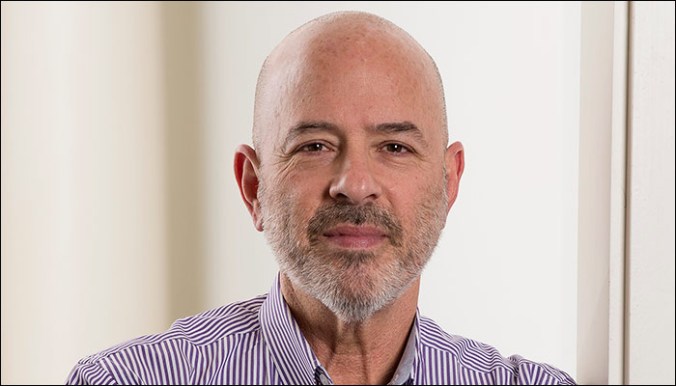
Richard Sugarman — the founding president of The Connecticut Forum — has been named the first Executive Director of Hartford Promise, which will offer up to $20,000 and non-financial support to its first graduating class in 2016.

“We are extraordinarily fortunate to have Richard Sugarman lead this initiative,” said Dr. Martin Estey — the Executive Director of the Hartford Consortium for Higher Education who also served on a panel at PromiseNet 2014. “His proven leadership skills, ability to build collaborations, and knowledge of the community and educational issues are profound. I’m excited to work with him.”

Sugarman’s Connecticut Forum is an award winning non-profit organization that brings nationally known panelists to Hartford four times a year to discuss a variety of timely and important topics. The Forum has also developed outreach programming, including The Connecticut Youth Forum which grew from the response to Focus on Race Relations in 1993.

“Education…providing the highest quality education and opening all the doors of possibility for every child in our community has been a core value and longstanding priority for me,” said Sugarman. “Hartford Promise offers a transformative opportunity to make the dream of higher education a reality for every Hartford student. I’m excited to launch Hartford Promise and work with many others to build it into the significant, sustained promise that all our children deserve.”

The requirements for the scholarship are very similar to New Haven Promise as Hartford scholars will need to be city residents who have been enrolled in the public system for their entire high school career. They will need to carry a minimum 3.0 grade point average and meet district attendance criteria.

“Richard Sugarman’s appointment moves us another step toward our vision of creating a school system where every student is well prepared, both intellectually and financially for college and career success. I’m excited and eager to begin working with him,” said Hartford School Superintendent Beth Narvaez. “The Hartford Promise is a well thought out approach to building student readiness and breaking down barriers that stand in the way of post-secondary education. It will define our district for many years to come. I want to thank the business and non-profit leaders in the city who joined together to support this breakthrough strategy.”

To date, $3.8 million has been pledged to Hartford Promise from contributors and champions including: The Travelers Foundation ($2 million); Hartford Hospital ($1 million); George Weiss-Say Yes to Education Foundation ($500,000); Newman’s Own Foundation ($200,000); and Robert Patricelli, Chairman, President and CEO of Women’s Health USA ($100,000).

Sugarman started the position last week and one of his first days on the job included a visit to New Haven to take in the release of an early progress study by the RAND Corporation.

Finishing Big More Important Than Starting Big

cop-richmond-at-night

Here at Cities of Promise not a week goes by without an inquiry a week from somewhere new. Someone reaching out to better understand what it takes to start a Promise program. And the first concern is always, how can we pay for it?

While it is great to have a fabulously wealthy individual, organization or company bestow a huge amount of seed money for a Promise program, it is hardly a requirement.

It is possible to gather a relatively small amount and partner with a college and company to leverage more benefit. And then build a structure for students to take advantage of the funds available through PELL grants and local scholarships to make college affordable. If a pilot program can be created, it could be the first step toward bigger donors, bigger dollars and bigger impact.

That’s the initial vision of the folks in Richmond, Va., who attended PromiseNet 2014 in New Haven, Conn. It will start with Future Centers in city schools to serve as an “on-ramp” for a larger goal of a Promise program. Starting with forms and financial literacy, RVA Future hopes to make tuition scholarships to community college available in 2017.

“We need to say to students and families: ‘This path is real. It’s available. And it’s available for you. Not for someone else. For you.’ They have to believe that. Once they believe that, it creates a demand for improvement at all levels,” said Dr. Thad Williamson, director of the city’s Office of Community Wealth Building.

Tina Griego of Richmond’s Style Weekly, an alternative news source, hit the nail on its economic head when she wrote, “[RVA Future] will depend upon Richmond’s white economic power structure — its donor class — to build the scholarship fund, acting upon what it knows to be true: Richmond cannot continue to hemorrhage middle-class families as soon as the middle-school years hit and expect to reach to its full economic potential.”

If cities fail to adapt to changing demographics, they could simply be doomed. The Greensboro, N.C., community is recognizing that and isn’t waiting to start small. Officials have raised $9 million already this year to gain the support and resources of Say Yes To Education, which has Promise initiatives in Syracuse and Buffalo.

Back in Richmond — where six Fortune 500 companies are headquartered — school board member Shonda Harris-Muhammed, who has been helping to shape city’s educational future for about a year, said, “We need partners and, I’m going to be candid, we need to decide as a community whether we are going to support public education in this city or not. Are we going to put our money where our mouths are? This is a bridge we are building between the city and the school district.”

After all, their futures rely on one another.

$5 Mil Toward A Generational Opportunity

cop-syt-greensboro

Cities of Promise reported in January that folks in Greensboro, N.C., were excited about the possibility of becoming the first metro area outside of the Northeast to become a member of the Say Yes To Education network.

That initiative got a huge boost this week with the announcement of a $5-million commitment from the Phillips Foundation, which focuses on several components of Greensboro’s vibrancy. Executive Director Elizabeth Phillips explained the largest donation in Phillips Foundation history by calling the Say Yes initiative “a once-in-a-generation opportunity for Guilford County.”

The partnerships are being secured in cooperation with Guilford County Schools, the Guilford Education Alliance, the Community Foundation of Greater Greensboro and the Community Foundation of High Point. Marquita Brown of the Greensboro News & Record reported that additional donations are expected to be announced in the coming weeks.

The only other public mention of an entity in the running for the Say Yes grant is Pittsburgh School District, which already benefits from the expansive Pittsburgh Promise program.

Greensboro expects to know the Say Yes decision in the coming months.