Promise Gains Traction

michelle-reach

While the notion of college affordability is already gaining national attention in the run for the White House, the idea of expanding opportunities and promising programs is also a hot topic on the local scene.

lebron-michelleOn Wednesday at the University of Akron, First Lady Michelle Obama will join NBA superstar LeBron James at an event focused on the importance of post-secondary education. Mrs. Obama will speak about her Reach Higher initiative, which encourages students to aim beyond a high school diploma, to an audience that will be largely impacted by James’ Akron I Promise Network, which has partnered with the University to provide a free college education to as many as 2,300 students enrolled in the program.

And, of course, Promise is seeping into both state and local politics. The Bangor Daily News ran an editorial earlier this month advocating for a promise of higher education to low-income students with the goal of raising Maine’s lagging college degree attainment rate. “If policymakers have decided Maine can afford to send surplus state funds to an income tax relief account, tap future liquor revenues in order to lower the income tax and forfeit $16 million in tax credits to bankroll a closed mill, surely they can find a way to make a critical investment in Maine people that will yield dividends,” it concluded.

In Adrian, Mich., a construction project manager named Kirk Valentine is running for mayor on a platform that includes a promise for his city. “I am thinking, if elected, about approaching the citizens to see if they would be interested in making a City Charter amendment and creating the Adrian Promise,” he told The Daily Telegram. “I would like to pattern it after the Kalamazoo Promise. It would be a fund that would create scholarships for Adrian High School students that reside in the city limits, attended their last 6 years in the Adrian School District and are working towards their higher education goals. Obviously it would not create a full-ride situation like the Kalamazoo Promise, but I think it would create an amount that would be helpful in their future endeavors. In turn it may encourage families to live inside the city limits and attend our schools. I believe this venture could have great potential.”

And down in South Florida, Miami-Dade College President Eduardo Padron is lobbying for the funding of a statewide Promise program. “We should seize this moment and work across party lines to get this done in our state as well,” he said in reference to programs in Tennessee and Oregon. “We should create a Florida Promise that can build on existing programs and encourage the potential in all of our students.”
A Tale Of Two Cities

leona-carter

The college debt crisis in America has families on the move for far different reasons.

The Bigler family left Wichita for a tiny, low-cost town in western Kansas to cope with debilitating debt, which Jon Bigler figures he will pay off at the age of 72. A physician’s assistant, he and his wife, Lori, are struggling. Adding their own college debt to that of their three daughters, the Biglers spend $2,500 each month on school loans. That doesn’t leave a lot.

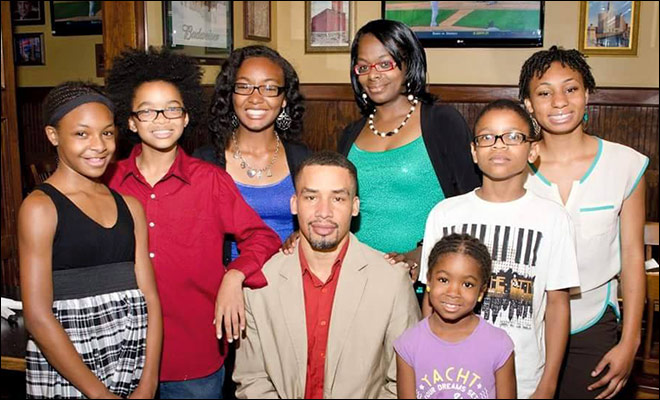
In contrast is the Carter family. In 2006, Omarr and Leona Carter packed up the family’s minivan and moved across the country, from Seattle, Wash., to Kalamazoo, Mich., to take advantage of the Kalamazoo Promise. The goal is for all six of their children to take advantage of the Promise and save perhaps a half-million dollars in the process. She calls the move “one of the best decisions we’ve made.”

Leona is now running for a seat on the Kalamazoo City Commission to work on behalf of a city she has come to love. “We have come to know Kalamazoo as not just a place of promise for our six children but as a place of great potential for anyone who’s willing to connect to resources and contribute to helping their community in a meaningful way,” she said.

Cities of Promise are truly Cities of Opportunity for families and the difference can be tremendous.

Call a Promise realtor today!

A Return To The Promise?

bayard-integration

By Patricia Melton

More than 60 years ago, the U.S. Supreme Court declared — in its landmark Brown v. Board of Education of Topeka decision — that state laws allowing separate public schools for black and white students were unconstitutional. The ruling — which was unanimous — stated that “separate educational facilities are inherently unequal.”

Yet American schools are more segregated this fall that at any time since 1968. To illustrate the point, the nation’s top five populous cities — New York City, Los Angeles, Chicago, Houston and Philadelphia — all have white populations of more than 40 percent. None of their public school systems, though, have white student bodies of more than 14 percent.

And in spite of the emerging trend of cities increasing its white population for the first time in years, Nikole Hannah-Jones — who writes investigative pieces for The New York Times Magazine — reports that “gentrification, it turns out, usually stops at the schoolhouse door.”

There are indications that this growing chasm is about to come under government scrutiny. Dr. John King — who has been picked to become the U.S. Secretary of Education after Arne Duncan’s recent departure — recently told attendees at a conference of the National Coalition on School Diversity, “I remain hopeful that there are opportunities in the reauthorization [of revised No Child Left Behind provisions] to specifically incentivize socioeconomic integration, to take steps that will improve the racial integration of our schools.”

“President Obama has been taking on issues toward the end of his term that he wouldn’t touch in earlier years. So to me, the moment is ripe for the administration to take some important steps on integration,” said Richard Kahlenberg, a senior fellow at the Century Foundation. “You have a new secretary of education who is deeply committed to the issue. You have a president who appears willing to expend some political capital toward the end of his term to address issues that are important to him. And you have the backdrop of unrest in a number of segregated urban areas. There’s more focus on this issue than there has been in a long time.”

And all the metrics indicate that the time is just right.

Patricia Melton is the Executive Director of New Haven Promise

Where A Free College Education is a Reality

cop-williamson-1

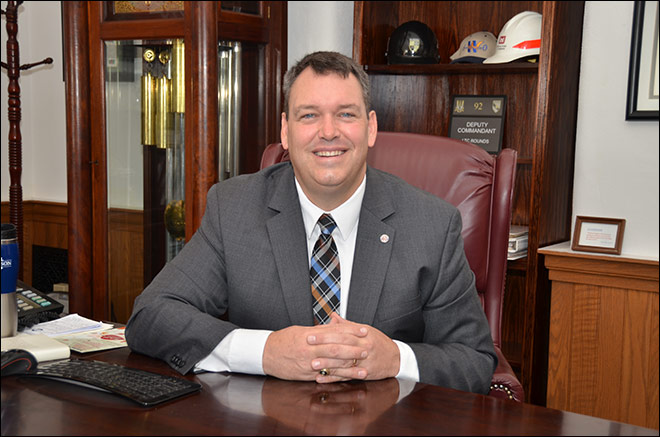
By Michael J. Rounds

The cost of a college education is extraordinarily high and increasing each year. One in three college undergraduates now receives a Pell grant and many eligible low income students don’t even apply. Recent proposals have been made for new government programs to provide free college tuition for two years of community college. However, the opportunity for a free college education at one college has been a reality for decades.

I am president of Williamson College of the Trades, a small accredited postsecondary institution located on a 220-acre campus near Media, Pa. Williamson is a unique educational institution in several important respects. It is the only college in the country – other than the military academies – which provides full scholarships (tuition, room and board) to all of its 270 students. These three-year scholarships are valued at $81,000.

cop-williamson-2Unlike most colleges, Williamson receives no government aid. It relies entirely on income from its endowment and contributions for its continued support. Williamson’s students also do work around the campus, such as in the kitchen and on the grounds. While such activities help to reduce costs, they also promote a work ethic for the students. Students also give back by volunteering for community service projects. Williamson students helped out in Mississippi after Hurricane Katrina, built a clinic in the Dominican Republic and a Veterans Memorial in New Jersey.

Williamson was established in 1888 by Isaiah Vansant Williamson, a Philadelphia merchant and philanthropist, who endowed a free institution for the education of young men in skilled trades. For 127 years, Williamson has provided full scholarships for all of its students in a three-year residential educational program. Each year, 25 percent of qualified applicants are selected and 98 percent of those selected enroll. Preference in admission is given to young men who would not otherwise be able to pursue a college education due to their family’s financial circumstances. The average taxable family income per family member is under $5,500 a year for the current entering class.

Today, Williamson offers an Associate in Specialized Technology degree in power plant technology, machine tool technology, painting and coatings technology, construction technology (masonry and carpentry) and horticulture. Williamson has an enviable on-time graduation/completion rate of 75 percent, which far exceeds the completion rate of many colleges, especially community colleges. One key factor in the high graduation rate is that students and their families do not have the stress of figuring out how to pay tuition bills or need to incur any student loans.

Williamson College provides extensive support services, mentoring and counseling since most of its students are first-generation college students. In accordance with the expressed wishes of its founder and as part of its educational program, Williamson emphasizes the development of good character traits for its students, including a strong work ethic, excellence, persistence, self-discipline, determination and service.

For many years, including periods of adverse economic conditions, virtually all of Williamson College’s students have a career-related job upon graduation or pursue further education. At a recent career fair on the Williamson campus, 103 companies showed up to interview and attempt to hire 73 graduating seniors. Many of our students receive multiple job offers. One recent graduate in machine tool technology had nine job offers.

As new proposals for expanded student financial aid are evaluated, one important lesson from Williamson’s experience is that generous financial aid is often not enough to assure the success of first-generation college students. A more comprehensive approach that includes knowing and interacting with the students personally, instilling values and assuring a network of support are key factors in Williamson’s success rate.


Michael J. Rounds — a former U.S. Army Lieutenant Colonel, West Point Assistant Professor, and Deputy Commandant of the United States Military Academy Preparatory School — became the 13th president of the Williamson Free School of Mechanical Trades on July 1, 2013.