
A Stadium, A Promise Or Both?

atlanta-stadium

Last month in Atlanta, it was announced that Mercedes Benz had purchased the naming rights to the new football stadium which will replace the 23-year-old Georgia Dome in 2017.

Perhaps the most intriguing thing about the naming agreement was its length of term. It will expire in 2042. If recent history is a guide, that will be about the time that the stadium — despite this cool fly-through — will be imploded. Washington Redskins’ owner Daniel Snyder is, in fact, talking about a new stadium even though FedEx Field just turned 18.

Maybe I shouldn’t pick on Atlanta, because as Richard Florida notes, it could just as well be Dallas or Minneapolis or Buffalo or Cleveland or the Bay Area.

But there is something special about taxpayers footing $600 million in the construction of this new stadium for the mighty Atlanta Falcons, a team that has won 44 percent of its games all-time and has such a notable “Ring of Honor” with the likes of Steve Bartkowski, William Andrews, Gerald Riggs, Jeff Van Note, Jessie Tuggle, Tommy Nobis, Mike Kenn, Claude Humphrey and Deion Sanders. Let’s call them “Neon and the Eight Who’s?”

Yes, $600 million… for a stadium that will likely last 25 years. What is a building’s legacy once it is demolished? Memories?

Is it possible to use this opportunity to float an idea that would truly leave a lasting legacy?

The person getting the most from the taxpayers’ $600 million is Falcons’ owner Arthur Blank, the Home Depot co-founder who is worth about $3 billion. He has also founded the Atlanta United FC soccer team, which will use the Mercedes-Benz Stadium until its inevitable demise.

The 72-year-old Blank signed the “Giving Pledge” in 2012, thus committing to give away at least half of his fortune someday.

Here’s a start. If he developed a city-wide Atlanta Promise program, beginning in 2017, which — in combination with federal financial aid — made college affordable at in-state institutions for every city high school graduate with a 2.5 grade-point average, it would take more than 25 years to spend $500 million (which is less than 20 percent of Blank’s assets).

It’s pretty simple — changing an academic culture by incentivizing and investing in its people would provide a double benefit for the city and the Falcons. After all, a Promise program could substantially increase the number of residents who could afford a visit to the stadium.

Heads Up America: The Focus On Affordability Just Got Real

It’s an audacious plan — to basically change K-12 public education to K-14 — but President Barack Obama doubled down on his Heads Up America proposal of free community college last week. He first broached the American College Promise in January in his State of the Union address, but it was clear that the odds of a successful Congressional act to address a new $60 billion educational investment would be long. A Hail Mary pass plus a two-point conversion long.

But at Macomb Community College in Warren, Mich., on Wednesday he called education “the secret sauce to America’s success,” referred to “a Movement going on,” and unveiled an advisory board of educators, business and non-profits leaders and politicians who will study different models and spread the word about free tuition. The advisory board — chaired by Dr. Jill Biden — is available here.

“I’ve been focused on community colleges,” Obama said in his speech. “They are at the heart of the American dream. For every young person willing to work hard, I want community college to be as free and universal as high school. It’s easy for politicians to say young people are the future. But you’ve got to walk the walk. No kid should be priced out of a college education. No hardworking young person should be denied just because of where they started. You don’t have to necessarily go to a four-year degree to get a good job, but you need to have some specialized skills.”

This initiative has recently been formalized in Tennessee and Oregon and is being piloted in Minnesota. It has also been established by community college systems in places like Miami, Chicago, Seattle and Philadelphia.

Threading the needle with an act of Congress is not required. Colleges, cities and states have already created incentives and motivations for students that are “willing to work for it” and there is significant federal money already out there. What’s needed is awareness, courage, will and additional funds to close the gaps.

President Obama and Department of Education Secretary Arne Duncan will be speaking about college access and affordability on Monday at North High School in Des Moines, Iowa, as part of Duncan’s annual back-to-school bus tour. Without question, one of the topics will be the Department of Education’s new College Scoreboard, which is a massive collection of data regarding success, debt and income of those receiving financial aid or loans from the federal government. Click here for a fascinating piece on how the data was collected and prepared for public consumption.

Protecting The Promises

star-chicago

At its best, the Promise movement attacks the opportunity gap. But to sustain a Promise program is hardly an easy task. By design, such a program motivates students to perform well academically thus a growing number are expected to meet the requirements each year. On top of that, there is no indication that increasing college costs will level off.

So Promise programs — perhaps the best intervention in attacking the opportunity gap — struggle to keep up. Most of the recent Promise news is focused on finance. Here’s a spin around the nation:

star-denverVoters in Denver, Colo., might be asked to take on responsibility of funding the Denver Scholarship Foundation. The proposal before the Denver City Council is a sales tax increase of 0.08 percent — less than a penny for a $10 purchase — which would generate about $10 million for the scholarship organization. One councilman reported that his constituency is asking why this has become a city responsibility, but a recent study uncovered a nine-fold return on money spent by the Denver Scholarship Foundation. That in a state that has been ranked 47th in the U.S. for higher education funding.

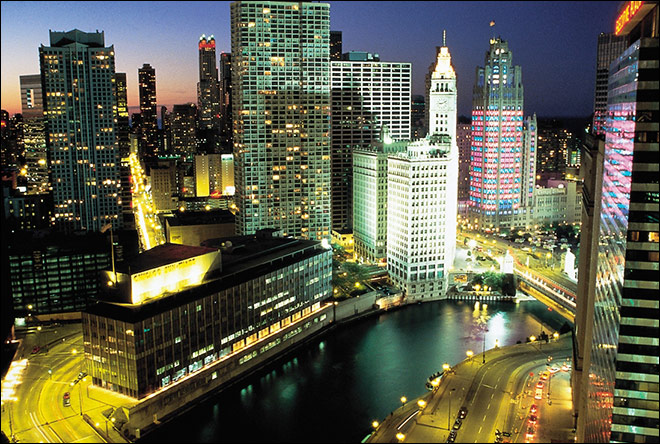
Known locally as UIC, the University of Illinois-Chicago recently stepped up to sweeten the pot for recipients of the Chicago Star Scholarship, which gives free community college tuition to high-performing city students. UIC has offered guaranteed admission and up to $5,000 in support for those who earn an associate’s degree through the program. And outspoken Mayor Rahm Emanuel promised to be knocking on the doors of others to talk about their “responsibility to the kids of Chicago.” Emanuel made it clear that he wants higher ed support and he wants it soon, saying, “It would be easy to step back, observe the problem, study the problem, have a couple papers written on the problem, have a symposium on the problem, discuss what people should do about the problem and then go for a break and have a cup of coffee.”

Down in Greensboro, N.C., where more than $25 million has been raised toward an endowment for a Say Yes To Education program, city officials were hardly unanimous in their support of the initiative. At issue? The leaders of the campaign did not reach out to the Guilford County Board of Commissioners until “the ninth inning,” according to the board chair. That county board is also displeased that the early discussion did not include the county’s charter school students, which is “significantly different than where [the Say Yes to Education] board thought we were headed,” according to Gene Chasin of Say Yes.

Two faculty members of the University of Pittsburgh penned an op-ed piece in the Post-Gazette that asked for a focus on state funding for higher education, instead of hand-wringing about recent changes to the Pittsburgh Promise. Lindsay Page and Jennifer Iriti wrote that the purchasing power of the Promise will decline in the face of a lack of support of higher education in the state. “As a community, we should celebrate and grow the gift of The Promise, but we also should seek to protect that gift by pushing Harrisburg to reinvest in public higher education,” the piece concluded. “Without such reinvestment, continued increases in the costs of higher education faced by families will do more to hinder access to the promise and opportunity of higher education than the recent scaling back of The Pittsburgh Promise.”

Investigate The Promise Investment

PromiseNet is heading back to Kalamazoo, Mich., and registration for the event — which will take place Nov. 10-12, 2015 — is now open.

pnwt-2015The early registration rate is $275 (though there is $50 per person reduction for those with groups of at least three). Those rates go up $25 per person starting Oct. 12. There is also a single-day rate of $175 for Nov. 11, which includes all-day programming followed by the Kalamazoo Promise 10th Anniversary Gala.

The kickoff event for Promise programs will be a luncheon featuring remarks from Wes Moore, a Rhodes Scholar and decorated Army combat veteran who has launched BridgeEdU. That initiative — which focuses on college completion and career placement — looks to reinvent the freshman year of college by providing a “softer on-ramp” to higher education. Moore has been well covered, including features on Meet the Press, The Daily Show with Jon Stewart, The View, MSNBC, NPR, USA Today and People Magazine. He also also hosts Beyond Belief on the Oprah Winfrey Network and serves as the executive producer and host of Coming Back with Wes Moore on PBS.

The breakout sessions will cover considerable ground, including research findings on the impact of selected Promise programs, discussion on how to begin with fundraising and managing a Promise program and a focus on students beyond enrollment and graduation from college. Click here for the full agenda.

This will be the seventh PromiseNet conference. Last year’s event in New Haven, Conn. — the first one held on the East Coast — attracted more than 100 organizations, including a dozen from California. The video above was produced by New Haven Promise and you can click here for a series of images from PromiseNet 2014.